The full form of BCA is Bachelor of Computer Applications. It is a three-year UG degree programme designed for students who are interested in building a career in computer applications, IT and software development. The BCA course provides students with both theoretical knowledge and practical skills in areas such as programming, databases, networking and web development. The BCA degree course is generally split into six equal semesters and covers a range of BCA subjects that help students develop their technical and problem-solving skills.
For admission to a BCA course, candidates generally need to complete Class 12 or an equivalent examination from a recognised board. Admission to BCA programmes is offered either on the basis of merit or through entrance examinations conducted by universities and institutions. Some of the entrance exams accepted for BCA admission include CUET, SET and IPU CET, depending on the college and its admission process.
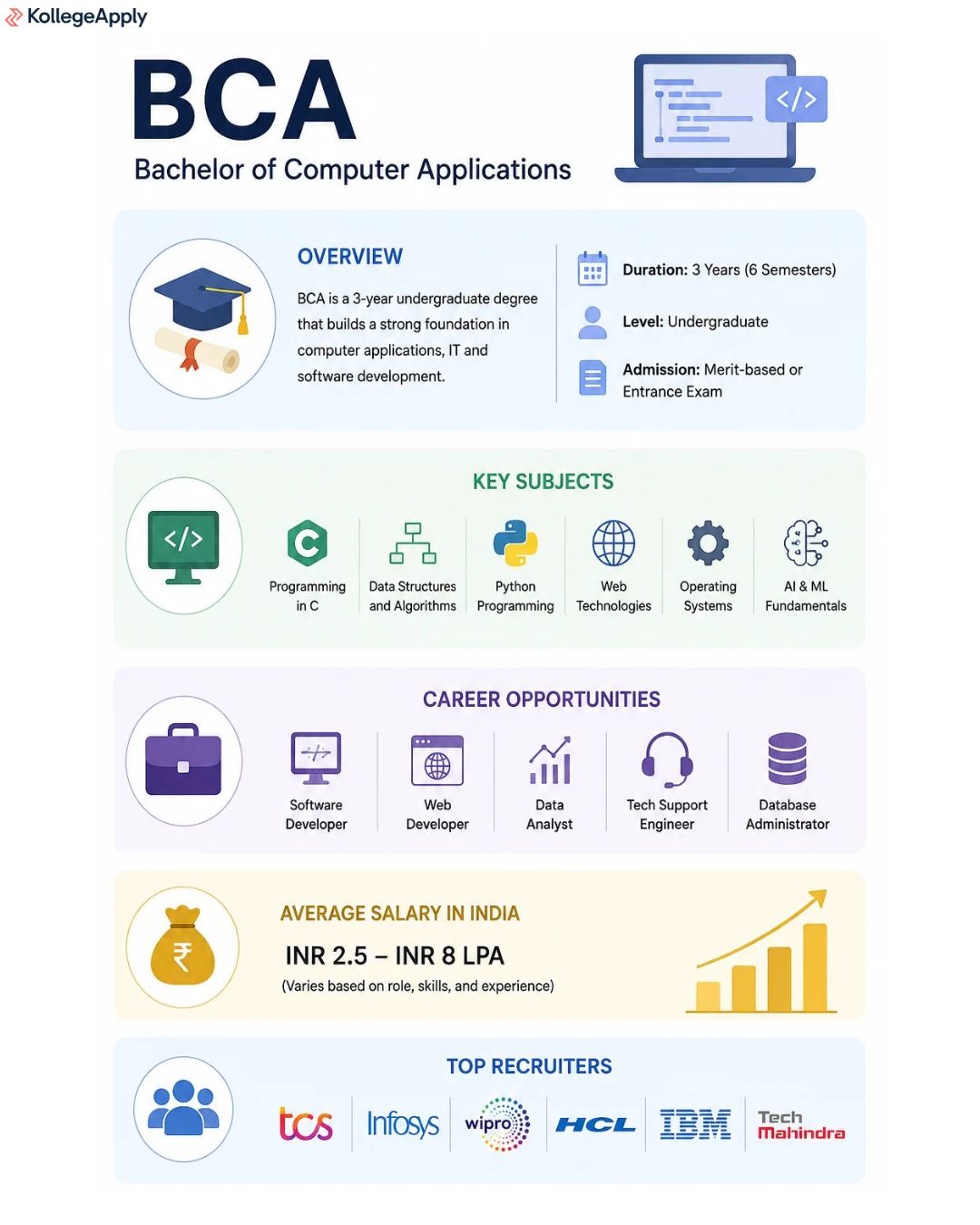
The starting salary after completing BCA can range from around INR 2.5 LPA to INR 8 LPA per annum, depending on factors such as job role, skills, location and employer. With more years of experience and stronger technical expertise, BCA graduates can progress to higher-paying roles and earn more. The BCA course can lead to career opportunities in areas such as software development, web development, data analysis, networking and cybersecurity.
- BCA Key Highlights
- What is the BCA course about?
- Why Study BCA?
- Is BCA Worth It in 2026?
- What is the eligibility criteria of BCA?
- Which Entrance Exams Are Required for BCA Admission in 2026?
- What are the BCA Course Fees in India?
- BCA Course Top Colleges in India
- What Is the BCA Admission Process 2026?
- What is the BCA Syllabus?
- What Is the Salary After BCA?
- Is BCA Better Than BTech?
- BCA FAQs
BCA Key Highlights
The BCA key highlights provide a quick overview of the course, covering important details such as duration, eligibility, admission process, fees, subjects, career opportunities, recruiters, and average salary. Reviewing these details before admission can help students understand the overall structure and requirements of the programme, compare different colleges, and make an informed decision based on their academic and career goals. Check out the table given below to learn more:
What is the BCA course about?
Bachelor of Computer Applications (BCA) is a three-year undergraduate degree programme designed for students who want to build a career in computer applications, information technology and software development. The BCA course covers areas such as programming, database management, computer networks, web development and software engineering. The BCA degree course helps students develop technical and problem-solving skills and provides a foundation for entry-level careers in the IT sector or further studies.
The course combines theoretical concepts with practical learning through projects, assignments and industry-oriented activities. Students study various BCA subjects, including programming languages, databases, networking and web technologies, while some programmes may also cover areas such as artificial intelligence, cybersecurity and cloud computing. This makes BCA a suitable option for students looking to develop technical skills and build a career in the technology sector.
Why Study BCA?
Pursuing a BCA course can help students build a strong foundation in computer applications while developing practical skills required for careers in the technology sector. The programme offers a combination of technical learning, career opportunities and scope for higher studies, making it a suitable choice for students interested in IT and computer-related fields. Some of the key reasons to study BCA include:
- Strong technical foundation: The course helps students develop skills in programming, databases, networking and software development through relevant BCA subjects.
- Multiple career opportunities: After completing a BCA degree course, graduates can explore roles such as software developer, web developer, data analyst, system analyst and IT support executive.
- Practical learning: Projects, internships and hands-on assignments can help students apply concepts learned during the BCA course to real-world situations.
- Scope for higher studies: BCA graduates can pursue higher studies such as MCA, MBA in IT and specialised programmes in areas including data science, artificial intelligence and cybersecurity.
- Industry-relevant skills: Depending on the university, the BCA course may include emerging technologies such as cloud computing, cybersecurity, artificial intelligence and mobile application development.
- Flexible and accessible option: The BCA course fees vary depending on the institution and mode of study, allowing students to select a programme according to their academic and financial requirements.
- Career and salary growth: The BCA starting salary in India per month can be around INR 21,000, depending on the job role, employer, location and skills. With relevant experience and specialised expertise, graduates can progress to higher-paying technology roles.
Is BCA Worth It in 2026?
Yes, a BCA course can be a worthwhile choice in 2026 for students interested in computers, technology and IT careers. The value of a BCA degree course depends not only on the qualification but also on the technical skills, practical experience and specialisations students develop during the programme. With the continued growth of areas such as artificial intelligence, cloud computing, cybersecurity and data science, BCA graduates can explore a range of technology-focused career paths.
The key reasons why BCA can be worth pursuing in 2026 include:
- Growing demand for IT skills: The expansion of AI, cloud computing, cybersecurity and data-driven technologies is creating opportunities for professionals with relevant technical skills.
- Early entry into the technology sector: A three-year BCA course allows students to build programming and IT skills at the undergraduate level and enter the workforce or pursue higher studies after graduation.
- Industry-relevant learning: Depending on the university, BCA subjects can include programming, database management, web development, networking and emerging technologies, giving students a foundation for technology-related roles.
- Multiple career options: After completing BCA, students can explore roles such as software developer, web developer, data analyst, system administrator, mobile app developer and cybersecurity professional.
- Scope for higher studies: A BCA degree course can serve as a foundation for pursuing an MCA, MBA in IT or Business Analytics, or specialised programmes and certifications in areas such as AI, data science and cloud computing.
- Scope beyond traditional IT roles: Students can also use their technical skills for freelancing, entrepreneurship, app development, web development and other independent technology-based opportunities.
What is the eligibility criteria of BCA?
The BCA eligibility criteria define the minimum academic requirements students need to meet before applying for the programme. Generally, candidates must have completed Class 12 or an equivalent examination from a recognised board, with the minimum marks and subject requirements varying by college or university. The key BCA qualification and admission requirements are tabulated below:
Which Entrance Exams Are Required for BCA Admission in 2026?
Students who wish to take admission to a BCA course through an entrance examination can appear for exams accepted by their preferred college or university. Common entrance exams for BCA admission include CUET, IPU CET and SET, among others. The eligibility, exam pattern and participating institutions may vary for each examination. Students looking for BCA admission through entrance exams can check the table below to learn more about the major exams and their details:
What are the BCA Course Fees in India?
BCA course fees vary significantly depending on the university, location, facilities and programme structure. Based on the selected colleges below, the first-year BCA fees range from INR 32,000 to INR 2,01,500. Students can refer to the table below to compare the first-year fees charged by different universities and get an idea of the cost of pursuing a BCA degree course:
BCA Course Top Colleges in India
Choosing the right college is important for students planning to pursue a BCA course, as factors such as academic reputation, admission process, location and rankings can influence their overall learning experience. Some popular options include Christ University, Symbiosis Institute of Computer Studies and Research (SICSR), Banaras Hindu University (BHU), Amity University and Institute of Management Studies (IMS), Noida. The table below provides key details about these BCA colleges, including their location, NIRF ranking and admission process:
What Is the BCA Admission Process 2026?
The BCA admission process involves completing the application formalities, submitting the required documents and fulfilling the university's admission requirements. Students interested in the BCA course can follow the admission steps to complete their registration and secure a seat in the programme. The steps below explain the admission process at Teerthanker Mahaveer University:
Step 1: Visit the official Teerthanker Mahaveer University admission portal and complete the registration by providing the required personal and academic details.
Step 2: Complete the BCA application form with accurate information and submit the required details and documents.
Step 3: Upload documents such as Class 10 and 12 mark sheets, photographs, ID proof, transfer certificate and other required certificates.
Step 4: Depending on the university's admission requirements, candidates may need to fulfil the applicable merit or entrance examination requirements and complete document verification.
Step 5: Complete the admission process by paying the prescribed BCA course fees within the specified deadline to confirm the admission and secure the seat.
Documents Required
- 10th and 12th mark sheets and certificates
- Transfer and migration certificates
- Entrance exam scorecard (if applicable)
- Passport-size photographs
- Photo ID proof (Aadhar, PAN, etc.)
- Caste or category certificate (if applicable)
- Domicile and medical certificates (if required)
What is the BCA Syllabus?
The syllabus of BCA encompasses all the major topics such as programming, software development, AI, Cloud Computing, and Data Science. Christ University has planned this curriculum in such a way that it offers a strong base in computer science while presenting advanced topics and practical projects as well to make the student industry-ready. Read the structured BCA curriculum given below for more understanding:
What Is the Salary After BCA?
The BCA starting salary in India generally ranges from around INR 2.5 LPA to INR 8 LPA, depending on factors such as job role, location, technical skills and the organisation. With more years of experience, stronger expertise and specialised skills, BCA graduates can progress to higher-paying roles and earn more than the typical starting range.
BCA Salary Based on Job Role
The salary after a BCA degree course can vary considerably depending on the role and the technical skills required. The table below highlights the typical starting salary range for some common roles after BCA:
BCA Starting Salary Based on City
The BCA starting salary in India per month can also differ based on the city where a graduate works. Major technology hubs generally offer higher salaries, while Tier-2 and Tier-3 cities may have comparatively lower starting packages. Interested candidates can check out the table provided below:
Is BCA Better Than BTech?
BCA and BTech are both popular undergraduate options for students interested in technology, but they differ in course structure, duration, specialisation and career pathways. BCA focuses more on computer applications, programming and IT skills, while BTech in Computer Science generally provides a broader engineering and technical foundation. The better choice depends on a student's interests, career goals, preferred learning approach and plans for higher studies. To understand more about the difference between the courses, check out the table given below:
BCA FAQs
What is BCA?
BCA stands for Bachelor of Computer Applications. It is a three-year undergraduate degree covering programming, databases, networking and web development.
What is the eligibility for BCA?
Candidates generally need to complete Class 12 from a recognised board. Minimum marks and subject requirements may vary by university.
What is the duration of a BCA course?
A BCA course generally lasts three years. The programme is usually divided into six semesters covering computer-related subjects.
What is the BCA course fees in India?
BCA course fees vary by college and programme. First-year fees can range from around INR 32,000 to INR 2,01,500.
What is the BCA starting salary in India?
The BCA starting salary generally ranges from INR 2.5 LPA to INR 8 LPA. Salary depends on skills, job role, location and employer.
Which entrance exams are required for BCA admission?
BCA admission may be based on merit or entrance exams. Common exams include CUET, SET and IPU CET, depending on the university.
What subjects are taught in BCA?
BCA subjects generally include programming, data structures, databases, web development and operating systems. Some programmes also cover AI and cloud computing.
Is BCA worth it in 2026?
Yes, BCA can be suitable for students interested in technology and IT careers. Practical skills and specialised expertise can improve career prospects.
Is BCA better than BTech?
BCA is shorter and focuses on computer applications and IT skills. BTech provides a broader engineering-based education, so the choice depends on career goals.
What are the career options after BCA?
BCA graduates can work as software developers, web developers, data analysts, system administrators and cybersecurity professionals. Higher studies can lead to specialised roles.